
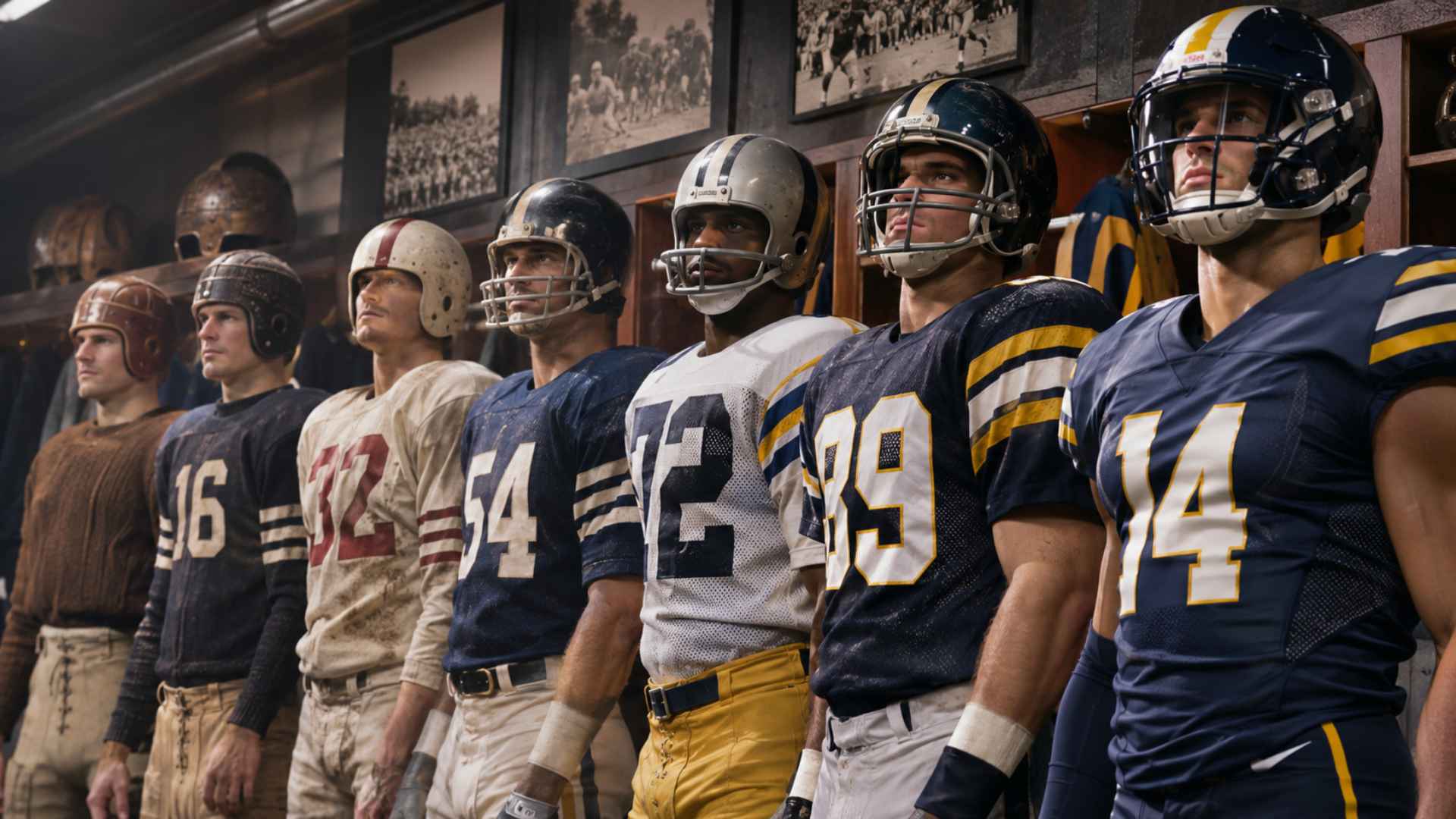
Football uniforms have changed considerably since professional teams wore heavy wool jerseys and plain leather helmets. Modern kits use lighter fabrics, carefully placed numbers, and graphics developed to work across television broadcasts, stadium seating, and merchandise. Yet the basic task remains familiar: identify the players and their team at a glance. Familiar colors and striping patterns often matter as much to supporters as the names printed across the back.
Early football clothing was built for durability rather than visual consistency. Equipment evolved alongside league rules, television coverage, and manufacturing methods. Jerseys gained more standardized numbering, contrasting home and away colors, and visible player names. Helmets became important identity markers as logos and paint schemes developed. Changes that appear cosmetic often reflect the practical needs of officials, spectators, and broadcasters trying to follow a crowded field of action.
Uniform traditions can also outlast particular players and coaches. Teams may adjust a number font or shoulder stripe while keeping their main palette because supporters associate those details with decades of games. Other clubs deliberately introduce different looks after a relocation or organizational change. Such decisions explain why an NFL jersey is simultaneously sports equipment, a visual identifier, and a record of a franchise’s history.
From Basic Numbering to Recognizable Team Colors
Numbers are central to football identification. NFL rules require a player’s number on the front, back, and shoulder or arm area, while permitted number ranges depend on playing position. Those markings help officials recognize eligible players and assist viewers in following formations. Legibility matters, which is why contrasting numerals and sufficient spacing remain important even when designers choose unusual typefaces or decorative outlines.
Team color systems became increasingly distinctive as clubs built regional followings. The Green Bay Packers’ green and gold, the Pittsburgh Steelers’ black and gold, and the Dallas Cowboys’ blue and silver each carry associations far beyond a single season. These examples also show that visual identity does not require constant reinvention. Small updates to proportions or materials can coexist with a largely recognizable appearance across generations.
Fabric Technology and Changes in Player Equipment
Jersey construction has shifted from relatively heavy materials toward synthetic performance fabrics that manage moisture and allow movement. Modern uniforms must stretch around protective equipment and withstand pulling during contact. The NFL banned tear-away jerseys in 1979, reflecting the need for equipment standards that apply fairly during games. Fit and material choices still involve a tradeoff between flexibility, durability, and the way a jersey sits over shoulder pads.
Sleeve shapes have changed as shoulder protection and tailoring developed. Modern player jerseys often have far less loose fabric than older styles, leaving designers with limited space for stripes and secondary logos. That is one reason some traditional sleeve treatments appear in shortened or relocated forms. Helmet graphics, pant stripes, and sock combinations now carry more of the visual language that once appeared on broad jersey sleeves.
Throwback Uniforms and the Value of Familiar Details
Throwback designs reconnect present-day teams with specific periods in their histories. Older colors, retro-number styles, and past helmet marks can remind spectators of earlier championships or long-standing rivalries. These kits are not always exact replicas because modern safety and equipment rules still apply. Their appeal comes from recognizable references rather than perfect historical reconstruction, particularly when the original materials would no longer suit contemporary play.
Recent redesigns show another approach: retaining familiar symbols while adjusting graphics for current use. Some franchises simplify number outlines; others incorporate local landmarks or regional references. Such decisions can provoke strong reactions because fans do not see uniforms as neutral packaging. Personal memories of family traditions, stadium visits, and favorite players become attached to colors that might otherwise seem ordinary.
Consistent team identity does not mean a jersey must remain unchanged forever. Designs can evolve with fabric technology, visibility requirements, and the community a team represents. The strongest connections usually come from continuity: a recognizable palette, readable numbers, and symbols that still make sense when players change. Across decades of professional football, jerseys have served as practical uniforms and as durable visual records of belonging. That continuity also helps new generations of supporters recognize a club before they have learned its history.