
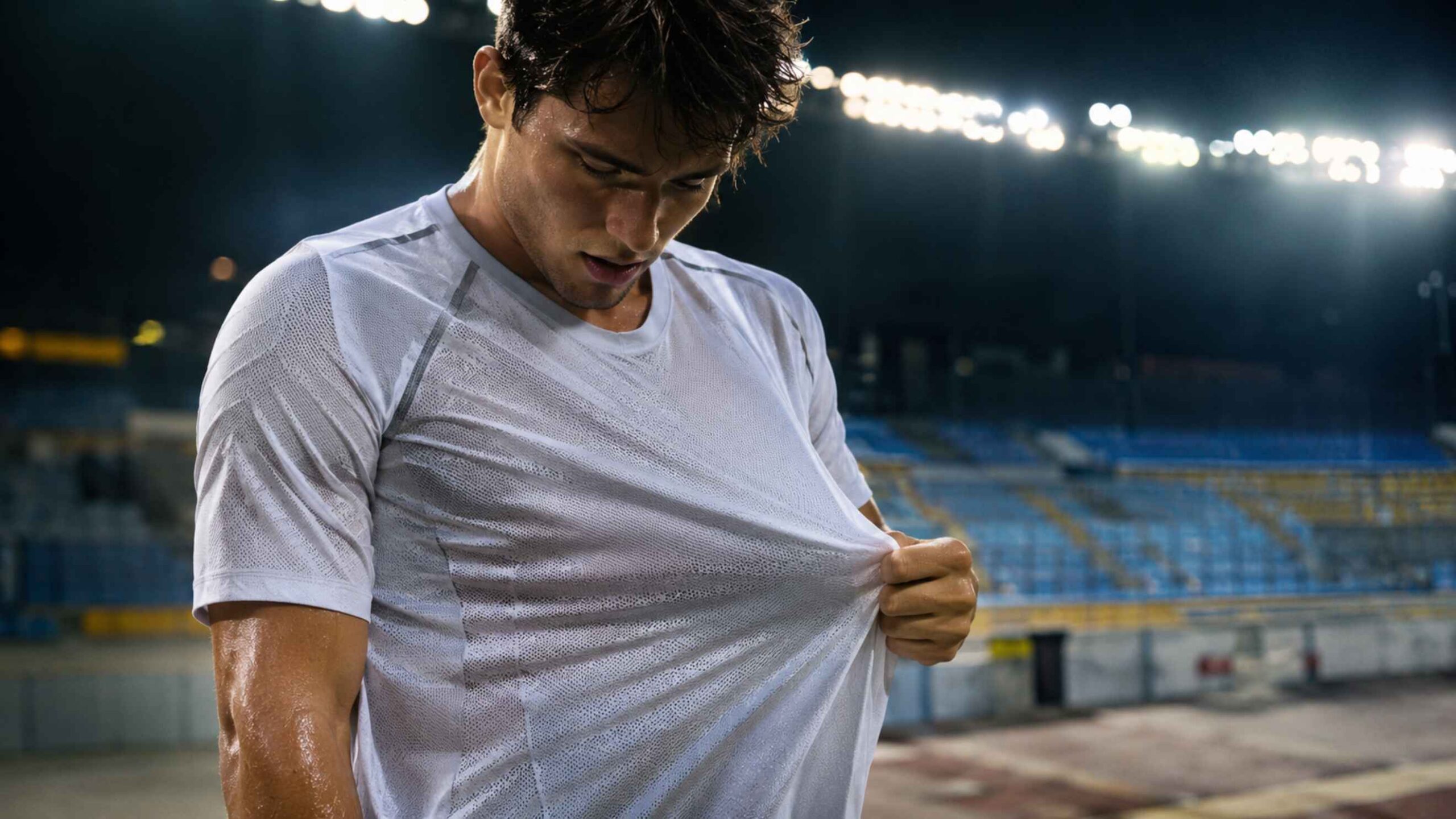
Sports jerseys are designed to serve several purposes beyond displaying team colors and player numbers. Their fabrics affect how comfortably they can be worn during physical activity, warm weather, and extended periods of use. Material selection also influences durability, garment weight, and maintenance requirements. These characteristics matter to professional athletes, recreational players, and supporters who regularly wear jerseys outside sporting venues.
Polyester has become a common material in modern sports apparel because its fibers are relatively strong, lightweight, and resistant to absorbing large amounts of moisture internally. However, different polyester jerseys can perform quite differently. Fabric structure, yarn properties, thickness, and finishing treatments all influence how a garment handles perspiration, airflow, and repeated movement during ordinary use.
Comfort cannot be determined by fiber composition alone. Two jerseys made entirely from polyester may have different textures, ventilation characteristics, and drying behavior. Knitted construction, surface treatments, and garment fit play significant roles. Products intended for active play may therefore differ from heavier replica jerseys designed primarily for casual wear, even when both display similar colors and visual details.
Moisture Management and Fabric Breathability
Moisture wicking fabrics are designed to move liquid perspiration across or through the material, where evaporation can occur. This process depends on capillary action, fiber arrangement, and the properties of the fabric surface. Polyester absorbs relatively little water into its fibers, but effective moisture transport requires suitable fabric construction or treatment. The presence of polyester alone does not guarantee rapid drying.
Breathability concerns the movement of air and water vapor through a textile. Looser or more open knitted structures may permit greater airflow, although performance also depends on fabric thickness and finishing. Research on polyester sportswear has shown that knit density, material weight, and porosity influence moisture transport and drying performance. Jersey design must balance these factors against coverage, appearance, and mechanical durability.
Fabric Construction and Wear Resistance
Sports garments experience repeated stretching, friction, washing, and contact with equipment or seating surfaces. Polyester fibers generally offer good strength and dimensional stability, but fabric construction still affects resistance to damage. Snagging can occur when yarn loops catch on rough surfaces, while pilling may develop as loose fibers become entangled. Heavier fabric is not automatically more durable in every application.
Printed graphics introduce additional maintenance considerations. Heat applied names, numbers, and emblems can deteriorate when exposed to unsuitable temperatures or aggressive washing. Sublimation printing works differently by introducing dye into compatible synthetic fibers rather than attaching a separate surface film. The method used influences the appearance and care requirements of the garment, although durability still depends on production quality and washing conditions.
Jersey Fit and Long Term Fabric Care
Garment fit influences both physical comfort and the way fabric responds during movement. Jerseys designed for athletic use may have closer fitting cuts, stretch panels, or ventilation zones. Casual versions can provide a roomier silhouette suitable for layering over other clothing. Neither construction is universally preferable; the appropriate choice depends on intended activity, personal comfort, and the manufacturer’s sizing specifications.
Washing practices can help preserve jersey appearance and function. Care labels should take priority because different fabrics and decorative elements require different treatment. Gentle washing with suitable detergent and avoiding unnecessary high heat can reduce stress on synthetic fibers and applied graphics. Fabric softeners may affect the performance of some moisture management finishes, making manufacturer instructions particularly relevant for technical sportswear.
Sports jersey durability reflects the combined effects of material quality, garment construction, printing methods, and maintenance. Lightweight fabrics can provide comfort without sacrificing practical strength when their construction suits the intended use. Meanwhile, thoughtful garment care can reduce premature wear. Evaluating jerseys through their actual material properties offers a more useful perspective than relying on appearance or fabric composition alone.